
THATCH ROOF GUIDE
How Long Does a Thatched Roof Last?
A practical comparison of natural and synthetic thatch lifespan, maintenance, installation and replacement factors.
- 10–12 min read
- Natural vs Synthetic
- Buyer’s Guide
Quick Answer
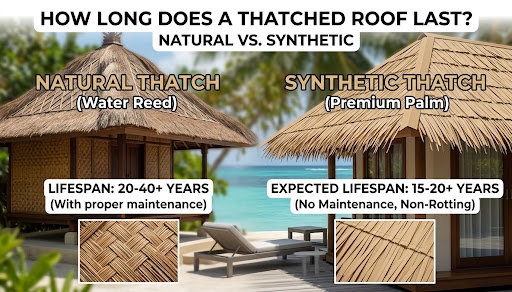
A natural thatched roof commonly lasts around 15 to 40 years or longer,depending on the roofing material, roof pitch, climate, workmanship and maintenance. Water reed generally lasts longer than long straw, while the roof ridge often needs attention before the main roof covering.
Synthetic thatch does not have one universal lifespan. Its service life depends on the material, UV exposure, product design, fastening method, climate and installation quality. Always check the specifications, installation instructions and written warranty for the exact product model.
A thatched roof can last for decades, but there is no single lifespan that applies to every roof. The final service life depends on the type and quality of the thatch, roof pitch, climate, drainage, workmanship and maintenance.
Traditional materials such as water reed, combed wheat reed and long straw have different expected lifespans. Synthetic thatch also varies because different products use different materials, structures, UV stabilizers and waterproofing systems.
This guide explains how long different thatched roofs may last, what causes premature deterioration and what buyers should check before choosing natural or synthetic thatch.
Explore our synthetic thatch roofing materials to compare palm, straw and reed-style products for different tropical roofing projects.
25–40+
Water Reed Years
25–35
Wheat Reed Years
15–30
Long Straw Years
10–15
Ridge Attention
These figures are general references rather than guarantees. A well-designed and professionally installed roof may last longer, while poor drainage, shallow roof pitch, heavy shade, unsuitable materials or incorrect fastening can shorten its service life.
Synthetic thatch should be evaluated according to the exact product specification. One lifespan claim should not be applied to every palm, straw, reed or roll-style product.
Lifespan reference: Thatch Advice Centre — Life Expectancy of Thatched Roofs
Average Lifespan of Different Thatched Roofs
| Roofing Material | General Lifespan Reference |
|---|---|
| Water Reed | 25–40+ years |
| Combed Wheat Reed | 25–35 years |
| Long Straw | 15–30 years |
| Thatched Ridge | Approximately 10–15 years |
| Synthetic Thatch | Varies by material, product and installation |
How Long Does Natural Thatch Last?
Water Reed
Water reed is generally considered one of the longest-lasting traditional thatching materials. A properly selected and installed water reed roof may commonly last around 25 to 40 years or longer.
However, reed quality, roof pitch, exposure, moisture and the skill of the thatcher all affect the final result. The ridge may require repair or replacement before the main roof covering.
Combed Wheat Reed
Combed wheat reed usually provides a softer and more rounded roof appearance. Its general lifespan is often estimated at approximately 25 to 35 years.
Regular inspection remains important because exposed ridges, valleys, roof penetrations and shaded areas may deteriorate faster than the main roof surface.
Long Straw
Long straw roofs generally have a shorter average lifespan than water reed. A typical reference range is approximately 15 to 30 years, although climate, material quality, roof design and workmanship can create significant differences.
Learn more about traditional thatching materials and their expected performance.
How Long Does Synthetic Thatch Last?
There is no universal lifespan for synthetic thatch. The term covers many different products, including molded palm panels, straw-style sheets, reed-style panels, continuous rolls and decorative non-waterproof materials.
The actual service life of synthetic thatch depends on the polymer, UV exposure, product thickness, roof pitch, waterproofing configuration, overlap, fastening method and local climate.
Before relying on a lifespan claim, request the exact product specification, applicable test reports, installation instructions and written warranty terms. A warranty should clearly identify the covered product model, duration, installation requirements, exclusions and the type of failure it covers.
UV Exposure
Sun intensity, UV stabilizers and color formulation influence long-term outdoor performance.
Roof Drainage
Roof pitch, overlap and drainage direction affect how quickly water leaves the roof surface.
Product Construction
Polymer type, thickness, molded structure and waterproofing configuration vary by product.
Installation Quality
Fasteners, supporting structure, ridge details and edge finishing affect the completed roof system.
What Affects the Lifespan of a Thatched Roof?
1. Roofing Material
Material species, density, maturity, stem quality and manufacturing consistency affect how a roof responds to moisture, wind and sunlight.
2. Roof Pitch and Drainage
A suitable roof pitch helps rainwater leave the surface quickly. Water that remains on the roof for longer periods can accelerate deterioration, particularly in shaded or poorly ventilated areas.
3. Installation Quality
Correct layering, fastening depth, ridge construction, roof thickness and detailing around roof penetrations all influence performance. Poor workmanship can shorten the life of otherwise suitable materials.
4. Climate and Roof Orientation
Heavy rainfall, strong wind, prolonged shade, high humidity, salt air and intense UV exposure can affect different roof areas at different rates.
5. Supporting Roof Structure
The battens, roof deck, waterproofing layer, flashing and drainage system must be appropriate for the selected thatch. Decorative synthetic products should not be treated as the main waterproof layer unless the product specification confirms that use.
6. Maintenance and Inspection
Small defects are usually easier to repair before they develop into widespread roof damage. Ridges, edges, valleys and roof penetrations deserve particular attention during inspections.
Signs a Thatched Roof Needs Repair or Replacement
Inspection Checklist
- Visible thinning or uneven areas in the roof surface
- Loose, damaged or missing ridge material
- Exposed fasteners, battens or supporting roof components
- Persistent leaks or signs of moisture inside the building
- Loose synthetic panels or damaged fastening points
- Poor drainage around valleys, edges or roof penetrations
- Large areas of deterioration that cannot be repaired locally
Not every visible defect requires a complete roof replacement. A qualified thatcher or roofing contractor should inspect the roof and determine whether local repair, re-ridging, partial replacement or complete re-roofing is appropriate.
For additional maintenance information, see the Thatch Advice Centre maintenance guidance
How to Extend the Life of a Thatched Roof
Good roof design, correct installation and regular inspection can help reduce premature roof problems.
- Select a product suitable for the climate and roof design
- Use an appropriate roof pitch and drainage system
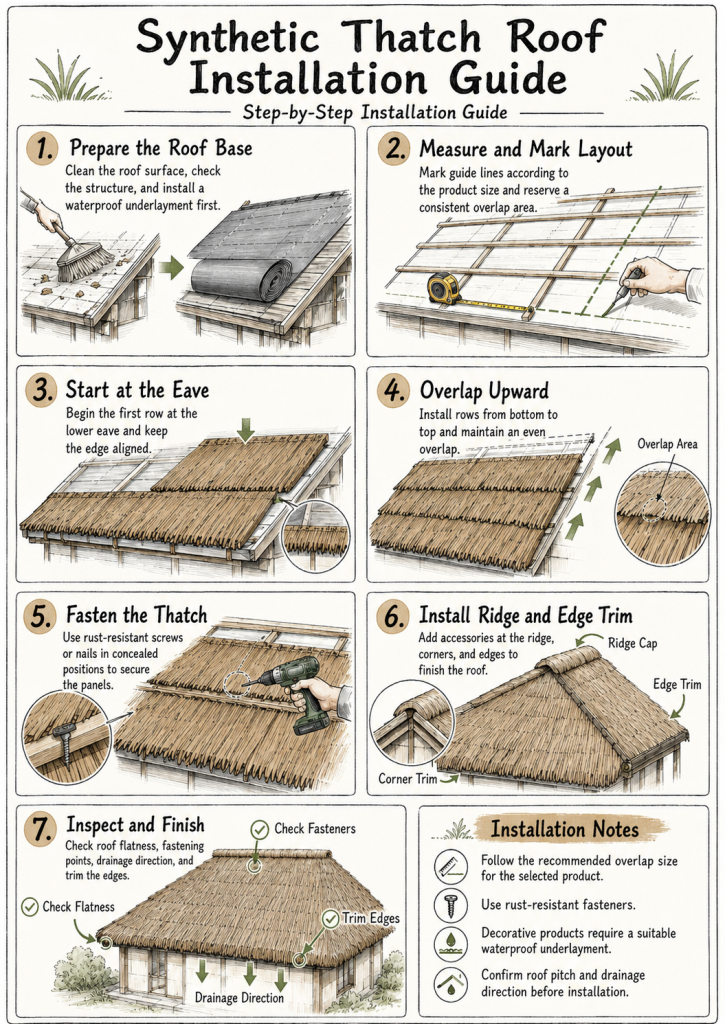
- Follow the specified overlap and fastening instructions
- Use rust-resistant fasteners where required
- Install a waterproof underlayer for decorative products
- Complete ridges, hips, valleys and edges correctly
- Keep nearby vegetation from constantly touching or shading the roof
- Inspect the roof regularly and repair small defects promptly
- Keep product specifications, installation records and warranty documents
Natural vs Synthetic Thatch Comparison
| Feature | Natural Thatch | Synthetic Thatch |
|---|---|---|
| Appearance | Naturally varied and traditionally handcrafted | More consistent in color, size and appearance by product |
| Lifespan | Depends on plant material, roof design and workmanship | Depends on material, UV exposure, product design and installation |
| Maintenance | Requires professional inspection and periodic repairs | Usually requires inspection and occasional cleaning or repair |
| Moisture | Organic material can absorb and retain moisture | Moisture resistance varies according to the selected product |
| Insects | Organic material may attract insects or other pests | Does not provide the same organic food source |
| Color | Changes and weathers naturally over time | Color stability depends on material formulation and UV exposure |
| Waterproofing | Relies on roof pitch, thickness and layered construction | Decorative and waterproof configurations are both available |
| Fire Performance | Depends on material treatment and the complete roof system | Fire-retardant options may be available for selected products |
| Best Suited For | Heritage buildings, traditional architecture and natural aesthetics | Resorts, tiki structures and projects requiring consistent materials |
Neither material is automatically better for every building. Natural thatch may be necessary for heritage architecture or projects that prioritize traditional craftsmanship.
Synthetic thatch may be more suitable when a project requires standardized panels, predictable colors, matching accessories and a repeatable appearance across multiple buildings.
Read our detailed synthetic thatch vs natural thatch comparison to evaluate maintenance, appearance, waterproofing and project suitability.
Which Option Is Better for Your Project?
Choose natural thatch when traditional materials, regional character and hand-crafted appearance are the main priorities.
Consider synthetic thatch when the project requires standardized panels, consistent colors, international shipping, matching accessories or a tropical appearance across multiple buildings.
Before choosing a roofing material, confirm the building type, roof shape, local climate, wind exposure, waterproofing requirements, fire requirements, expected appearance, installation experience and maintenance budget.
Commercial resorts, restaurants and public spaces may also need documented fire performance. Review our guide to fire-retardant synthetic thatch before selecting a product.
Frequently Asked Questions
How many years does a natural thatched roof last?
A natural thatched roof may commonly last around 15 to 40 years or longer. Water reed generally lasts longer than long straw, but roof pitch, workmanship, climate and maintenance strongly affect the final result.
Which natural thatching material lasts the longest?
Water reed is generally considered one of the longest-lasting traditional thatching materials, with a commonly referenced lifespan of around 25 to 40 years or longer.
How often does a thatched ridge need replacement?
A traditional thatched ridge often requires attention after approximately 10 to 15 years, although exposure, material quality and workmanship can shorten or extend this period.
Does synthetic thatch last longer than natural thatch?
Synthetic thatch may provide a longer replacement cycle in some applications, but there is no universal lifespan for every product. Compare the exact material, UV testing, installation requirements and written warranty.
Is synthetic thatch completely waterproof?
Not always. Some products are decorative and require a separate waterproof roof layer. Other products may offer one-side or double-side waterproofing configurations. Check the specification for the selected model.
What shortens the life of a thatched roof?
Common factors include poor drainage, unsuitable roof pitch, prolonged shade, damaged ridges, incorrect fastening, poor workmanship, severe weather and delayed repairs.
Can a damaged thatched roof be repaired without full replacement?
Sometimes. Local repairs, re-ridging or partial replacement may be possible when the main roof covering remains serviceable. A qualified contractor should inspect the roof first.
How can I estimate synthetic thatch material quantity?
Provide the roof dimensions, slope, shape, selected product and recommended overlap. Include additional material for cutting waste, ridges, hips, corners and edge accessories. Read our synthetic thatch roof cost guide for more detailed quantity and budget planning.
Planning a Natural or Synthetic Thatched Roof?
Send us your roof dimensions, project location, preferred thatch style and installation requirements. We will help review suitable synthetic thatch products, accessories, quantities and shipping options.