

Thatched Roof: How to Make an HDPE Synthetic Thatch Roof
- A-thatch
- April 17,2026
- 9:29AM
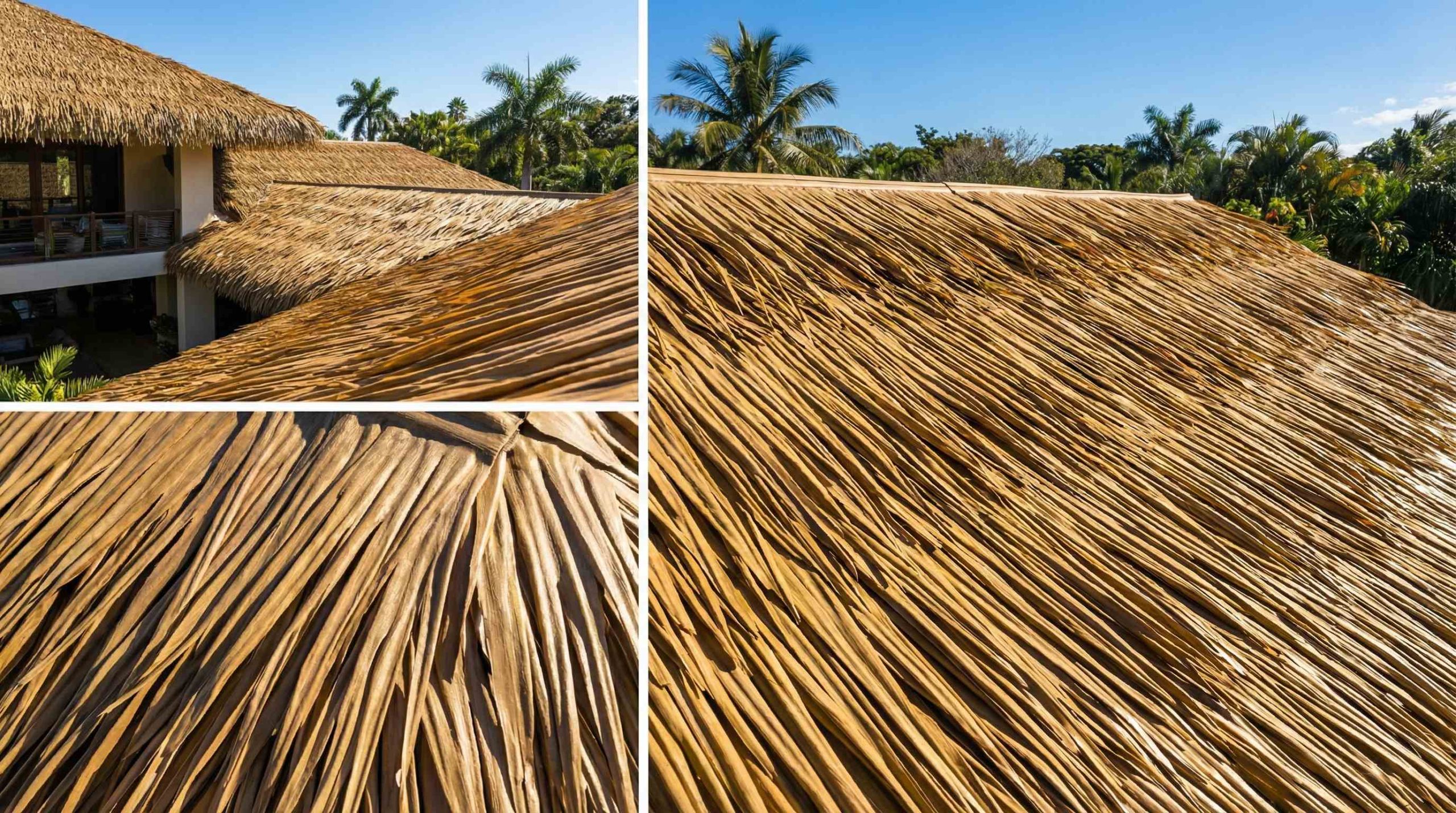
How to Build a Durable Thatched Roof with HDPE Synthetic Materials
If you are exploring how to construct a beautiful thatched roof without the constant maintenance of natural reed, modern HDPE (High-Density Polyethylene) synthetic thatch is your best option. It delivers the classic tropical look but installs easily—much like standard roof cladding.
Here is a quick, step-by-step guide to building a modern synthetic thatched roof.
Why Choose HDPE for Your Thatched Roof?
Unlike organic straw or palm, an engineered synthetic thatched roof provides:
Consistent Appearance: Uniform color and thickness across the entire roof surface.
Zero Rot & Pests: Plastic fibers do not absorb moisture or attract bugs.
Predictable Performance: Tested for wind uplift and proper water drainage.
Pre-Installation Requirements
Before laying any thatch panels, your roof structure must be properly prepped:
Roof Pitch: Ensure your structure meets the manufacturer’s minimum roof pitch to shed water quickly.
Underlayment: Synthetic thatch provides the look, but a high-quality waterproof membrane underneath is what actually keeps your building dry.
Insulation: Unlike a natural thick thatched roof, an HDPE system requires standard roof insulation installed below the deck for energy efficiency.
5 Steps to Install a Synthetic Thatched Roof
1. Lay Out the Battens Most HDPE systems mount to horizontal battens (furring strips). Mark the spacing with a chalk line and install them straight and level.
2. Install the Starter Course Start at the bottom eaves and work your way upward. Align the starter row properly so it overhangs the edge without blocking the gutters.
3. Overlap the Courses Add each new row so it completely covers the fasteners of the previous row. This staggering method creates the authentic layered profile of a traditional thatched roof and helps shed rainwater.
4. Seal Valleys and Flashing Valleys and roof penetrations are common leak points. Use proper valley metal, compatible sealants, and roof flashing kits. Trim the HDPE panels cleanly to avoid lifting or gaps.
5. Finish with the Ridge Cap Complete the installation using the manufacturer’s preformed HDPE ridge cap. Fasten it securely to resist wind uplift while maintaining required roof ventilation.
Conclusion
Building a premium thatched roof with HDPE synthetic materials is a straightforward process. By focusing on proper underlayment, strict overlapping rules, and careful flashing details, you can build a stunning, tropical roof that performs flawlessly for decades.
Categories
Related content
How long does a thatched roof last? Natural vs. Synthetic
tiki hut roof replacement materials for 2026: best options to stop rot
Synthetic thatch for theme parks and zoos: Which type is best? – A-thatch
Synthetic thatch palm leaves for resort construction – A-thatch
Synthetic Mexican thatched gazebo: DIY look, materials & durability – A-thatch