
Synthetic Tiki Project: DIY Tiki Decor
- A-thatch
- April 1,2026
- 3:13 PM
The Ultimate DIY Guide: Planning Your Synthetic Tiki Project
If you are dreaming of a tropical backyard escape, embarking on a synthetic tiki project is the smartest way to achieve that island vibe without the exhausting upkeep. Consequently, choosing engineered materials over natural palm or bamboo means you get to enjoy your oasis rather than constantly repairing it.
Furthermore, modern artificial materials deliver incredible realism alongside heavy-duty performance.
Why Choose Engineered Materials for Your Build?
Natural materials look great initially, but they quickly fall victim to weather and pests. In contrast, building your project with modern faux materials provides undeniable long-term benefits:
| Feature | The Synthetic Advantage |
| Appearance | Uniform color and texture make matching panels effortless. |
| Maintenance | Requires zero sealing, staining, or frequent replacements. |
| Durability | Specifically designed to withstand intense humidity, rain, and UV rays. |
| Hygiene | Completely eliminates pest nesting and mold growth. |
Pick Your Synthetic Tiki Project Centerpiece
Most successful DIY builds start with one solid anchor feature. Therefore, choose the option that best fits your available space and budget:
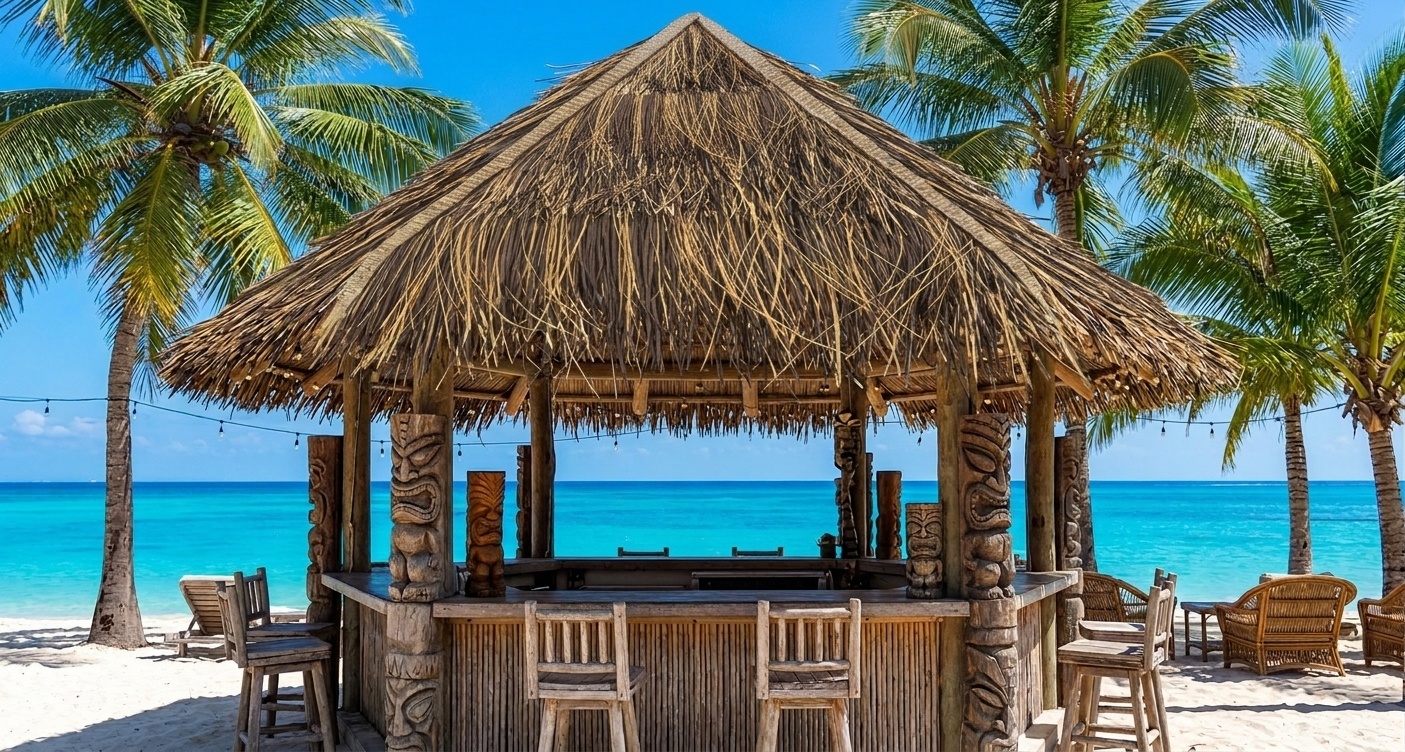
The Tiki Bar: A classic choice for entertaining. You can easily combine bamboo-style cladding, thatch roof accents, and carved decor.
Thatch Shade Structure: Perfect for pool areas. Adding a faux thatch roof to a pergola instantly creates a resort-style silhouette.
Privacy Bamboo Fence: Ideal for small yards. It beautifully defines the space and handles constant sprinkler moisture without rotting.
Essential Materials Checklist
Before you start building, you will need to gather these common construction components:
Synthetic bamboo panels, rolls, or poles
Artificial thatch bundles for roof edges or awnings
Exterior-grade screws and washers
Outdoor-rated construction adhesive
A heavy-duty stapler (for attaching thatch to sheathing)
Exterior plywood or OSB (Oriented Strand Board) for roof underlayment
Trim pieces (corner trim, fascia, end caps)
5 Steps to Build a Synthetic Bamboo Tiki Bar
If you decide to build a backyard serving station, follow this streamlined approach for a professional finish:
Plan the Layout: Sketch the footprint, carefully marking the guest side, storage areas, and power outlets.
Build a Sturdy Frame: Use pressure-treated lumber and anchor the base firmly to prevent twisting over time.
Add Flat Sheathing: Attach exterior plywood to the frame to give your cladding a clean, flat backing.
Install the Cladding: Apply your artificial bamboo starting on the most visible face, keeping seams perfectly tight.
Add a Thatch Accent: Elevate the final look by installing a faux thatch overhang or fascia detail.
Design & Maintenance Tips for an Authentic Look
A truly great synthetic tiki project relies on thoughtful finishing touches and minimal, yet consistent, care.
Layer Textures: Pair your artificial bamboo with warm wood tones, rustic rope accents, and matte black hardware.
Use Warm Lighting: Install under-counter LEDs and warm string lights for a cozy evening glow.
Keep it Clean: Simply rinse off dust with a garden hose and spot-clean using mild soap as needed.
Check Fasteners: Inspect screws and staples seasonally, especially after heavy summer storms.
Conclusion
Ultimately, a well-planned synthetic tiki project lets you create a permanent island atmosphere using materials engineered for real-world outdoor living. Whether you start small with a bamboo privacy wall or go all-in on a custom outdoor bar, you will enjoy the ultimate tropical aesthetic with a fraction of the traditional upkeep!
Categories
Related content
Upgrading Your Resort: Creating a Tropical Bamboo Wall That Passes Fire Codes
What are the scenarios where synthetic bamboo can be applied?
Synthetic bamboo mat benefits: top reasons to choose one
Advantages of Synthetic Bamboo Fencing: Durable & Eco-Friendly Solutions
Synthetic Bamboo vs Natural Bamboo: Best for Fences & Panels