Synthetic Thin Straw Thatch Oneside Waterproof Panels
Imagine the perfect addition to your backyard: a tiki hut with a classic, straw-thatched roof. While many backyard tiki hut design ideas feature this look, the reality of natural thatch often involves rot, pests, and replacement every few years. In practice, the constant upkeep can quickly overshadow the enjoyment. That’s because plant-based thatch roof material can be vulnerable to weather and insects.
But what if you could have the beauty without the bother? The choice between artificial thatch vs natural thatch is now clearer than ever. Modern synthetic options—such as synthetic thin straw thatch panels—give you that authentic tropical aesthetic, but they are engineered from durable, long-lasting materials designed to stand up to sun, wind, and rain.
This is the promise of low maintenance tiki bar roofing and modern synthetic thatch roofing. Instead of facing a cycle of costly repairs, you get a stunning, worry-free roof designed to provide decades of enjoyment. It’s the secret to achieving that island escape look, built to last right in your own backyard.
What Exactly is Synthetic Thatch?
If you’re wondering about the thatching roof meaning: it’s the traditional technique of layering plant stalks to shed water. In other words, a quick definition of thatching is “bundling and layering natural fibers for weather protection,” and a simple definition of thatched roof is “a roof made from those layered plant materials.”
The secret behind a thatch roof that lasts for decades isn’t magic—it’s a smart, modern material. Most high-quality synthetic thatch is made from High-Density Polyethylene (HDPE) or PA (polyamide)—often noted as material: modified HDPE/PA—to enhance UV and impact resistance. This hdpe and pa blend is a tough and often eco-friendly alternative made from recycled plastic. Because this material is non-porous, it can’t absorb water, meaning it will never rot, mold, or attract insects.
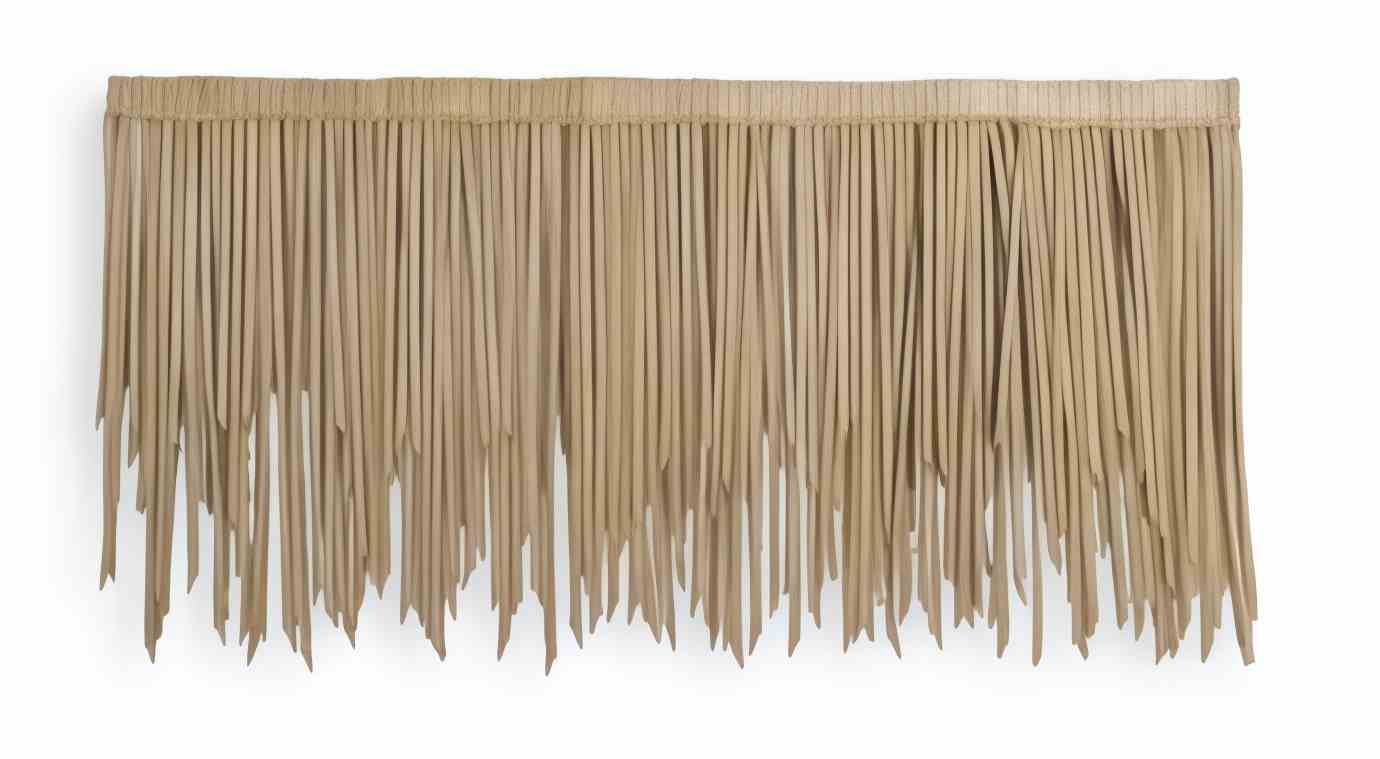
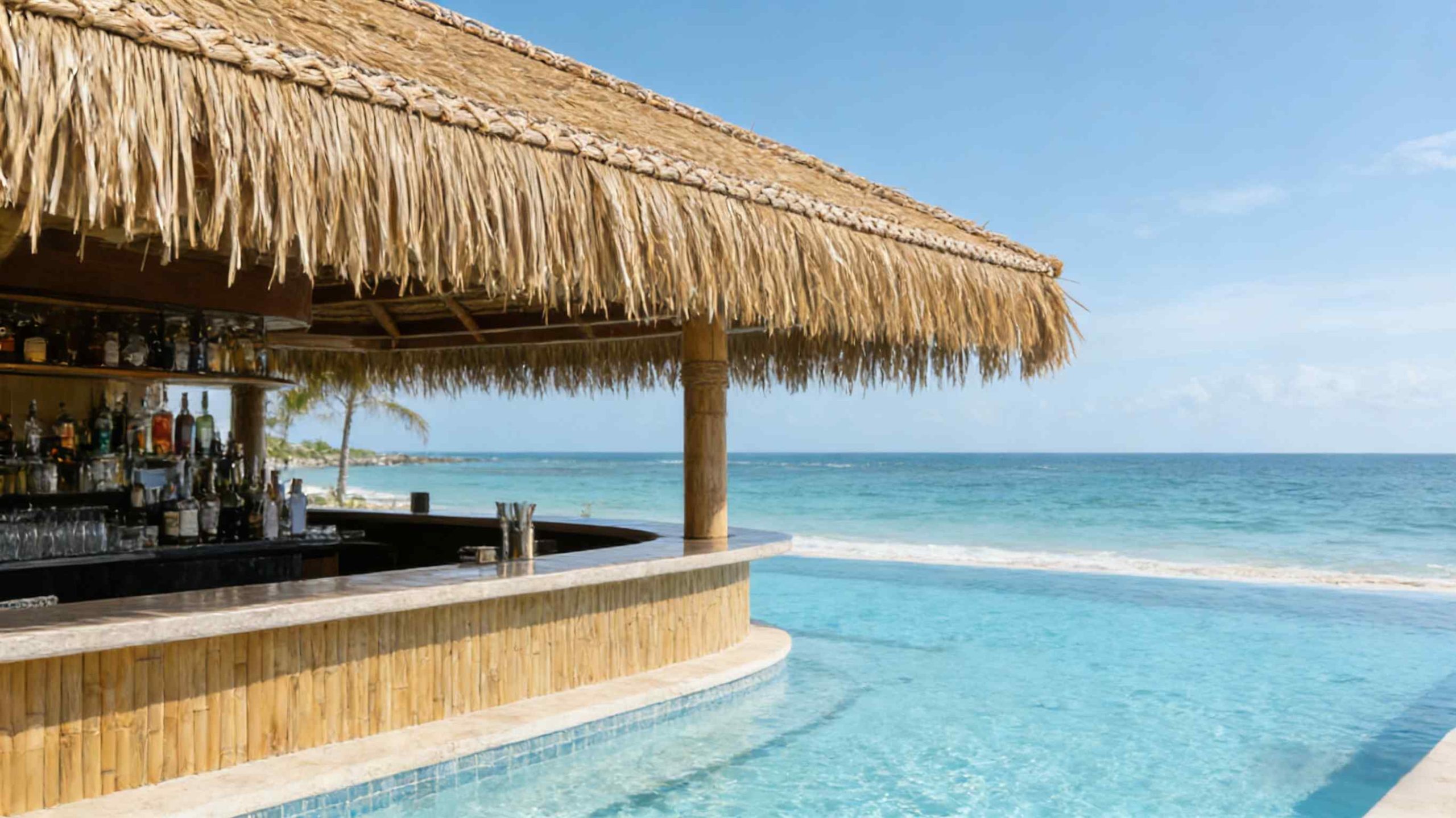
Within the world of synthetic thatch, the “thin straw” style offers a more refined, layered look. It’s designed to replicate the delicate appearance of natural reed or dried grasses. This finer texture creates softer, more authentic shadow lines, making it a popular choice for projects where realism is key, from a poolside palapa to a garden gazebo—especially when you choose synthetic thin straw thatch-oneside-waterproof panels for extra protection.
To avoid a fake plastic sheen, the realism comes from the details. Instead of being a single, flat color, individual strands are molded with subtle variations in tone—from sun-bleached tans to richer browns. Many products are offered with color: multi-color customizable options. This color is mixed directly into the material, not just painted on, so it won’t ever chip or peel away.
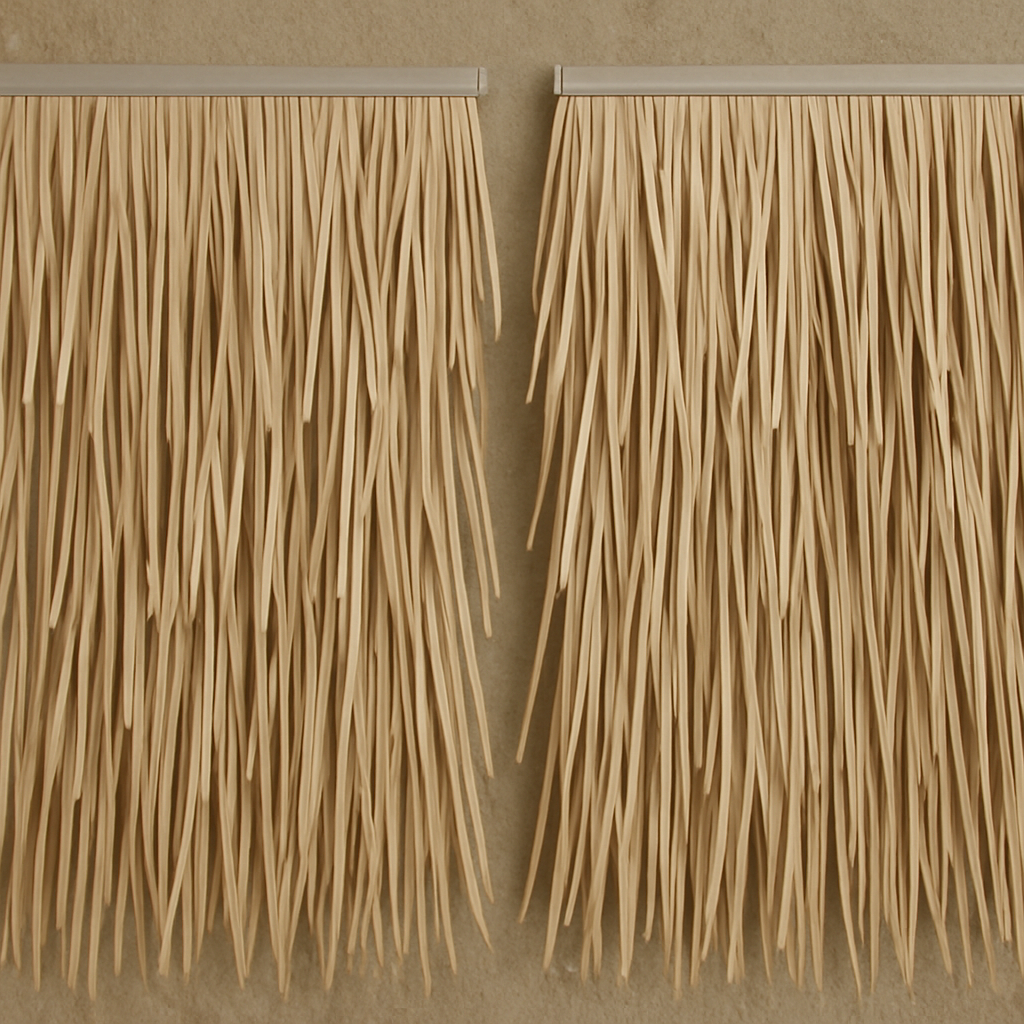
Quick product notes for planning:
- size: ∞*550mm (modular length with a 550 mm panel width)
- One-side waterproof construction aids quick drainage
- Works for a thatch roof, a thatched roof accent, or broader synthetic roofing solutions
Natural vs. Synthetic Thatch: A 20-Year Comparison
While natural thatch might seem cheaper at first glance, it’s essential to look at the total investment. Think of natural thatch like a subscription with recurring fees: you’ll pay for replacement materials and labor every 2-5 years, turning a one-time project into a cycle of extra work and expense.
By contrast, synthetic thatch is a one-time purchase. The initial cost of synthetic thatch roofing is higher, but it’s engineered to eliminate those surprise expenses for its entire lifespan. When you compare artificial thatch vs natural thatch over two decades, the advantages become clear.
Here’s a quick breakdown:
- Longevity & Cost: Natural thatch requires full replacement every 2-5 years. A synthetic roof is warrantied for 20+ years, often backed by a 20-year quality guarantee, saving significant money, time, and hassle.
- Maintenance: Natural thatch demands constant upkeep and can harbor mold. Synthetic needs only an occasional rinse.
- Safety: Natural thatch is a flammable fire risk that attracts pests. Synthetic is fire-resistant and pest-proof.
Over two decades, you could end up buying and installing a natural roof four to ten times. This long-term reliability erases any initial savings and is what gives homeowners true peace of mind—plus it aligns with sustainable roofing materials goals by reducing waste from frequent replacements.
The Top 3 “Peace of Mind” Benefits of Synthetic Thatch
Beyond the long-term savings, what truly sets synthetic thatch apart is the day-to-day peace of mind it provides. This isn’t just about avoiding replacements; it’s about eliminating the inherent worries that come with natural materials, letting you simply enjoy your backyard escape with a dependable synthetic thatch roof.
A major concern for any homeowner is fire safety. Unlike highly flammable natural straw, quality synthetic products are engineered with a Class A fire rating—the highest level of fire resistance available for roofing. This makes for a genuinely fire resistant tiki hut roof, allowing you to safely enjoy a nearby grill or fire pit.
Then there’s the issue of water. Natural thatch absorbs moisture, leading to rot and mold. Synthetic thatch is different because it’s a non-porous material, meaning water simply beads up and rolls off. The key benefits of these waterproof thatch panels are a dry space underneath and a roof that won’t degrade, sag, or grow mildew.
Finally, you can forget about unwanted guests. That cozy-looking natural roof is a prime target for insects, birds, and rodents. As a solid, inedible plastic, synthetic thatch is a completely pest proof thatch material. It offers them no food and no shelter, preventing infestations before they can even start.
Can You Install Synthetic Thatch Yourself?
After hearing about the benefits, the next big question for many is, “Can I install this myself?” With synthetic thatch, the answer is a resounding yes. It doesn’t require a master craftsman because it comes in lightweight, easy-to-handle panels, making a DIY palapa roof replacement an achievable weekend project.
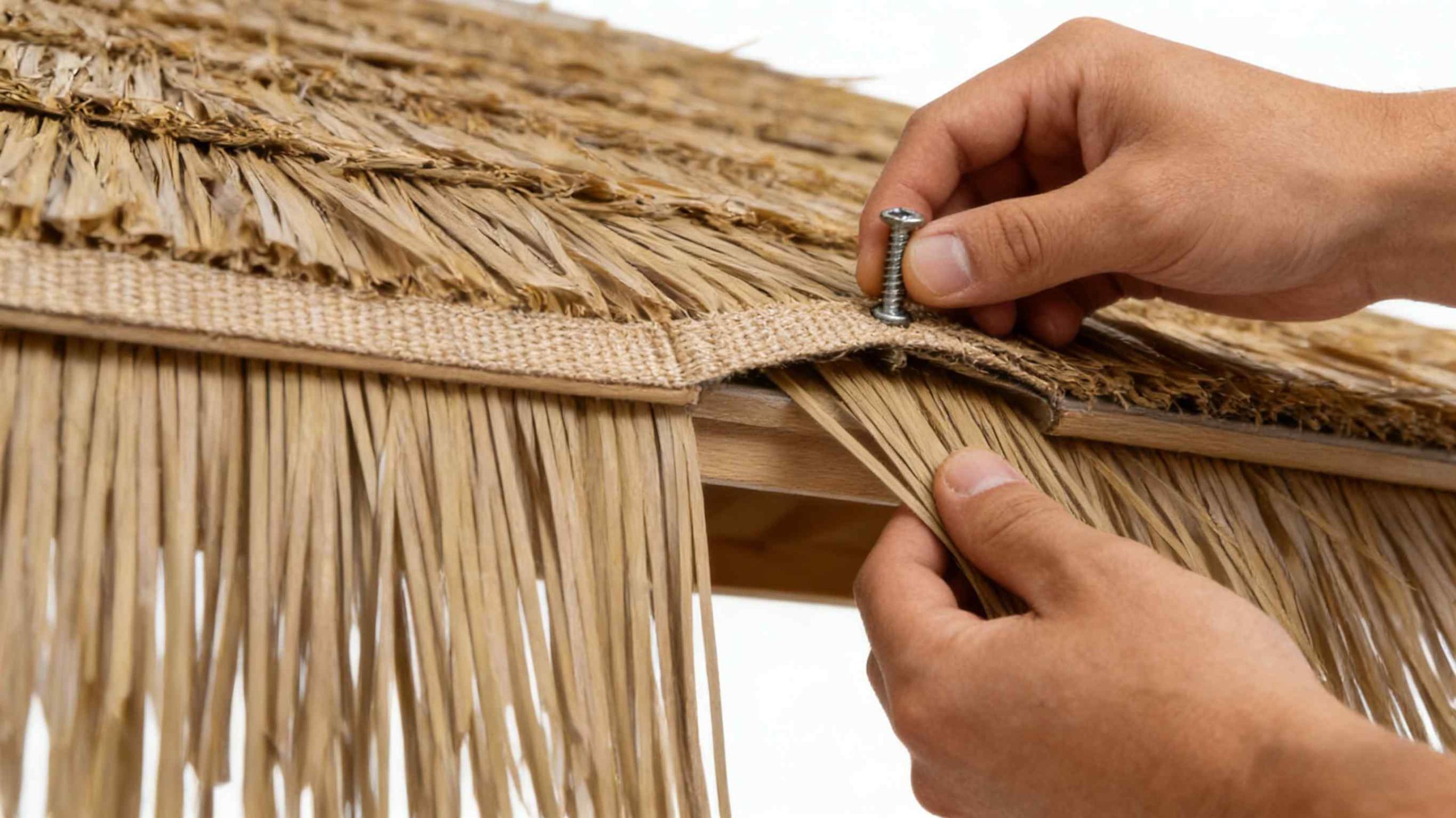
The process for how to install artificial thatch panels is refreshingly simple. Using just a drill or a heavy-duty staple gun, you start at the bottom of your roof and overlap each new row over the one below it. This method, similar to installing shingles, creates a seamless and completely weatherproof layer that directs rain down and away.
Because it’s so straightforward, you can often finish a small structure like a tiki bar or gazebo in a single afternoon. The best panels, often highlighted in product reviews for brands like Viro, are designed to hide their seams for a truly professional finish.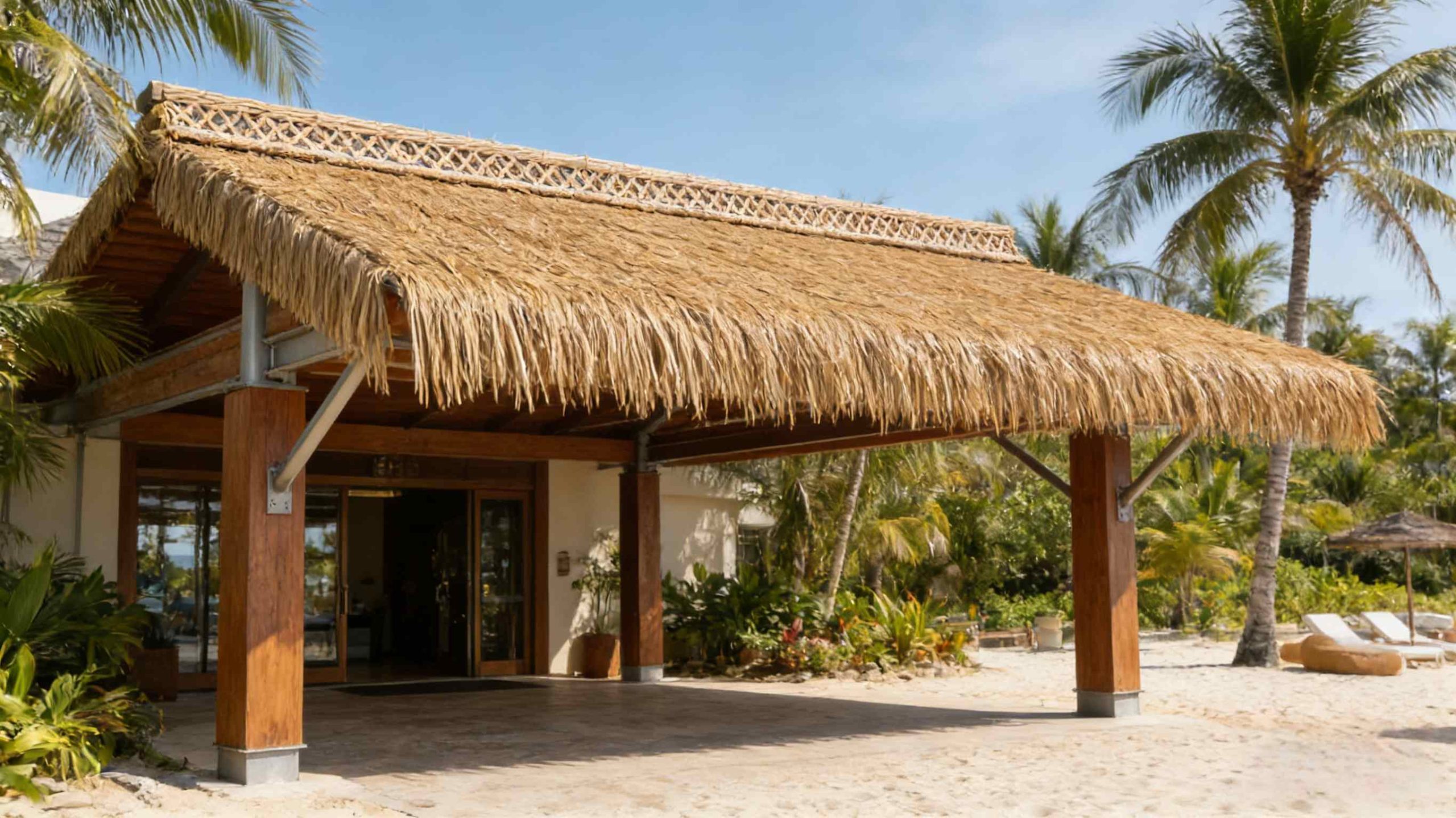
Is Synthetic Thatch Right for Your Backyard?
Synthetic thatch turns a high-maintenance novelty into a smart, long-term investment. Durable, UV-stable panels create a worry-free escape, letting you focus on your backyard tiki hut design ideas instead of future repairs. This simple checklist can confirm if it’s the right choice for you.
Synthetic thatch is a great fit if you want:
- A beautiful tropical look that lasts for decades
- A low maintenance tiki bar roofing you can install and forget
- A safe, fire-resistant option for your family and home
If that sounds like your goal, you’re ready to stop dreaming and start building your perfect, lasting oasis—using today’s synthetic roofing solutions for dependable performance.
More help
For U.S. code and compliance context, start with the International Code Council I‑Codes (https://codes.iccsafe.org/) and, where applicable, look for third‑party evaluation reports from ICC‑ES (https://icc-es.org/). For sustainability and end‑of‑life considerations, review EPA Sustainable Materials Management (https://www.epa.gov/smm) and EPA guidance on recycling common materials (https://www.epa.gov/recycle/how-do-i-recycle-common-recyclables). For standards often referenced when discussing plastics and outdoor durability, see ASTM D7611 (https://www.astm.org/d7611.html) and ASTM G154 (https://www.astm.org/g0154.html). For fire-safety code resources, consult NFPA (https://www.nfpa.org/), and for coastal/wind detailing considerations, reference FEMA coastal construction guidance (https://www.fema.gov/emergency-managers/risk-management/building-science/coastal-construction).