
How to install thatch palm leaves. Synthetic thatch guide

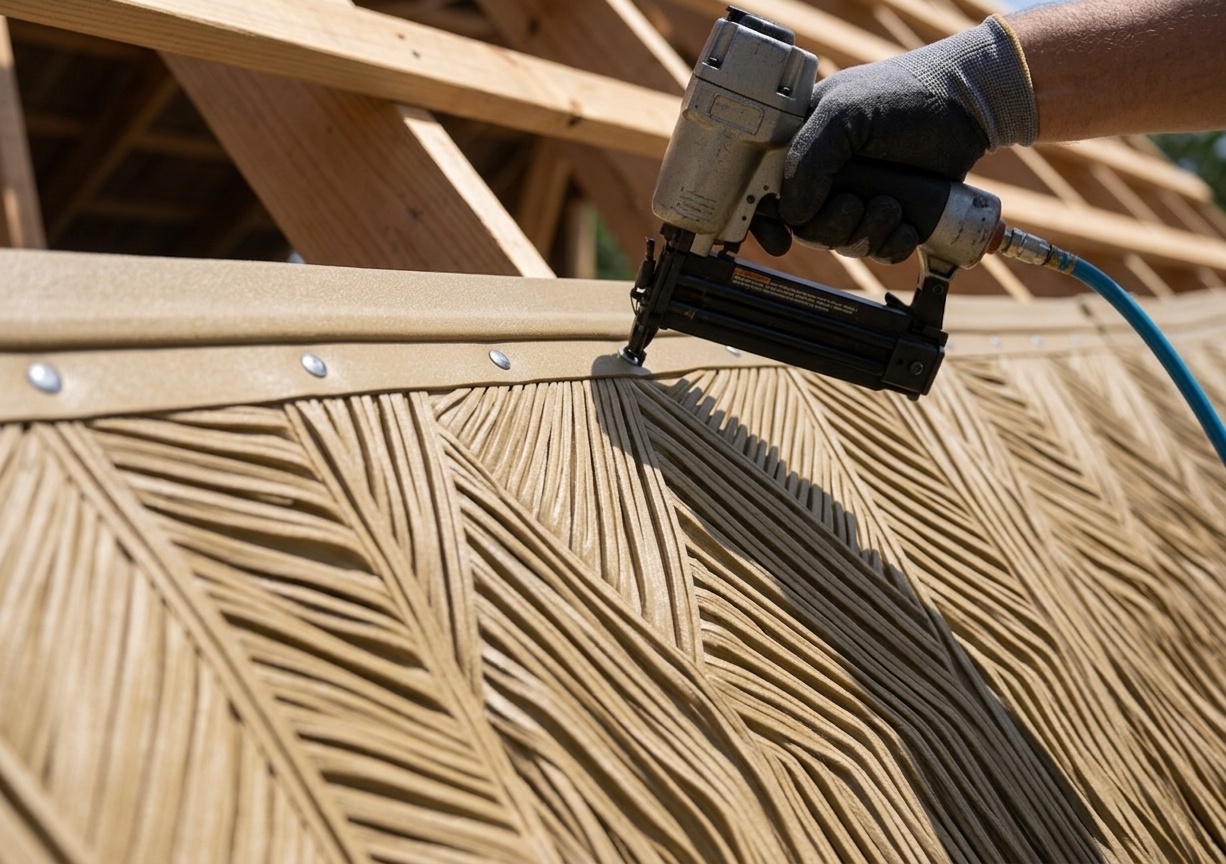
A close-up photograph of a gloved worker's hand using a pneumatic nail gun to secure a sand-brown modified HDPE synthetic thatch roofing panel to a wooden frame. The nail gun nozzle is precisely aligned with a metal-riveted pre-drilled hole on the panel's header band. The intricate herringbone-woven thatch pattern, as seen on the panel from image_6.png, is visible below the fastening point. Bare wooden roof trusses are in the background. Natural light illuminates the scene.

How to install thatch palm leaves. Synthetic thatch guide

Synthetic palm thatch installation gives you a consistent, low-maintenance thatch look with modern materials such as HDPE (hdpe) and UV-stable polymers. If you’re searching “How to install thatch palm leaves.” this guide focuses on synthetic palm thatch (not natural palm leaves). However, many core roof thatching techniques are similar across systems. Therefore, this guide covers roof prep, fastening, overlap, ridges/edges, and post-install inspection for harsh sun, heavy rain, pests, and hurricanes. For thatch palm leaves installation using natural materials, consult the appropriate product manual for those systems.

Keyphrase synonyms (use naturally on-page): install synthetic palm thatch, synthetic thatch roof installation, HDPE palm thatch installation, artificial/faux palm thatch installation, synthetic palm leaf roofing installation.

In general, keep exposure and overlap consistent so the roof sheds water and resists wind uplift.

What you need for synthetic palm thatch installation

  • Synthetic palm thatch panels/tiles (HDPE, UV-stable polymers)
  • Corrosion-resistant fasteners (galvanized or stainless, per your system)
  • Screw gun/driver, staple gun (if approved), measuring tape, chalk line, utility knife
  • Roof battens/purlins (or approved substrate) and ridge/hip caps designed for the system
  • Safety equipment: gloves, eye protection, non-slip footwear, fall protection where required

Step 1: Prepare the roof base (structure + layout)

A clean, square base is the difference between a straight finish and a wavy roof. First, confirm the roof deck/framing is sound. Next, set your batten/purlin layout to match the panel design.

  • Repair first: Replace rotten wood, tighten loose sheathing, and fix soft spots.
  • Mark lines: Use a chalk line for the starter course and for every few rows to keep alignment.
  • Plan drainage: Keep valleys clear and avoid creating debris traps.

Step 2: Install the starter course at the eave

Start at the bottom edge (eave). A straight starter course makes the entire synthetic palm thatch installation easier and improves the final look for a clean thatch roof line.

  • Align the first row to your chalk line.
  • Then, set consistent overhang (per your system spec).
  • Finally, fasten at the manufacturer’s recommended points so the row cannot lift.

Step 3: Overlap and stagger joints (water shedding + clean seams)

For synthetic panels, overlap hides fasteners and helps prevent wind-driven rain from pushing upward. In addition, consistent exposure helps the roof look even from eave to ridge. Use the overlap built into your product design and keep exposure consistent across the roof.

  • Maintain the same reveal/exposure for every row.
  • Stagger side seams so you don’t create vertical channels.
  • Check alignment every 2–3 rows and correct early.

Step 4: Fasten correctly (the most common failure point)

Under-fastening is a common reason synthetic thatch loosens in storms. As a result, follow the fastening schedule closely, especially at edges, corners, and ridges where wind pressure is highest.

  • Use corrosion-resistant fasteners suitable for exterior roofing.
  • Place fasteners where the next course covers them (for a clean finish).
  • Secure firmly without tearing or deforming the synthetic material.

Step 5: Detail ridges, hips, valleys, and edges

Most leaks and pest entry start at transitions. Therefore, use system-matched ridge caps, hip caps, and edge trims so the roof stays sealed and looks finished.

  • Ridge/hips: Install synthetic ridge/hip caps designed for your panel profile.
  • Valleys: Keep a clear flow path; avoid bulky buildup that traps leaves and debris.
  • Rakes/eaves: Reinforce fastening and ensure trims lock down the leading edges.

In other words, ridges and edges are high-risk zones—detail them carefully for wind and rain performance.

Fire rating and compliance notes (confirm for your project)

Some synthetic thatch systems reference fire testing such as GB 8624 B1 (gb 8624 b1). However, you should always confirm the exact certification documents for the specific product and installation method you are using. Additionally, verify local code requirements for your jurisdiction in the United States.

Final inspection and maintenance

After completing your synthetic palm thatch installation, do a full walk-around inspection and re-check fasteners. Then, schedule periodic checks to catch small issues early.

  • Inspect after the first heavy rain and after major wind events.
  • Remove debris buildup in valleys and at edges.
  • Replace any damaged panels promptly to prevent progressive loosening.

Conclusion

Ultimately, a reliable synthetic palm thatch installation is built on straight layout, consistent overlap, and disciplined fastening—plus careful ridge and edge detailing. For product-specific fastener spacing and ridge/edge details, follow the system manual for your model and local wind zone.

Q&A

Is this guide for natural palm leaves or synthetic thatch?

Short answer: This guide covers synthetic palm thatch only—materials like HDPE and UV-stable polymers. However, some roof thatching techniques overlap with traditional palm leaf roofing. Therefore, for natural thatch/palm leaf systems you should follow the specific product manual for those materials.

What do I need on hand to install synthetic palm thatch?

Short answer: For HDPE palm thatch installation you’ll typically need synthetic panels/tiles, corrosion-resistant fasteners, common layout/fastening tools, an approved substrate (often battens/purlins), and system-matched ridge/hip caps. In addition, use appropriate safety gear for roof work.

How do I start the layout so rows stay straight and the roof drains well?

Short answer: Successful synthetic thatch roof installation starts with prep and a true starter course. First, repair any rot or soft spots and confirm the deck/framing is sound. Next, set battens/purlins to the panel design and snap chalk lines for the starter and every few rows. Then, plan clear drainage paths—especially in valleys. Finally, begin at the eave, align the first row, set consistent overhang, and fasten at the manufacturer’s recommended points so the starter cannot lift.

How much overlap/exposure should I use, and how do I handle seams and fasteners?

Short answer: Use the built-in overlap of your synthetic panels and keep the reveal/exposure identical across the roof. Moreover, stagger side seams to avoid creating vertical channels. As you go, check alignment every few rows so you can correct early. Meanwhile, place fasteners where the next course will cover them for a clean finish, and use corrosion-resistant fasteners suitable for exterior roofing.

How should I finish ridges/hips/valleys/edges, and what about wind, fire rating, and maintenance?

Short answer: For a durable synthetic palm leaf roofing installation, detail transitions carefully. For example, use system-matched ridge/hip caps, keep valleys clear for drainage, and reinforce fastening at rakes/eaves. In high winds, follow the fastening schedule meticulously—especially at edges, corners, and ridges. For code compliance, confirm the exact fire certification for your specific system (some reference GB 8624 B1) and verify local requirements. After installation, inspect all fasteners, then re-check after heavy rain and major wind events, clear debris from valleys/edges, and replace any damaged panels promptly.

Scroll to Top