
Why choose a synthetic bamboo mat? Top benefits for homes
- A-thatch
- April 7,2026
- 11:18 AM
Top Synthetic Bamboo Mat Benefits for Homes
If you are planning a home upgrade, discovering the incredible synthetic bamboo mat benefits can save you from the constant upkeep of natural wood. Consequently, before starting your next project, it is essential to understand why premium materials like HDPE are the perfect solution. Furthermore, these modern products deliver the exact style of traditional bamboo but are specifically built to handle moisture, heavy foot traffic, and effortless daily cleaning.
Exploring the Core Synthetic Bamboo Mat Benefits
Natural bamboo is undeniably beautiful, but it requires careful drying and gentle cleaning. In contrast, HDPE synthetic mats are engineered to withstand real-life wear and tear. Here is a practical comparison of what you can expect:
| Feature | Natural Bamboo | HDPE Synthetic Bamboo Mat |
| Moisture Resistance | Swells and warps in damp areas | 100% Waterproof |
| Maintenance | Requires special sealing and care | Easily cleans with mild soap and water |
| Hygiene | Prone to mold, mildew, and pests | Resists mold and insect nesting |
| Durability | Splinters and cracks over time | Highly durable under heavy foot traffic |
Ultimately, if you want the tropical look without the exhausting maintenance, durable HDPE materials win every time.
Where to Maximize Synthetic Bamboo Mat Benefits
Because these products are designed for extreme resilience, they fit perfectly in areas where natural fibers fail. For instance, they are highly recommended for:
Entryways and Mudrooms: Handles dirt, mud, and moisture with a quick wipe-down.
Kitchens and Bathrooms: Tolerates high humidity and water splashes without rotting.
Patios and Outdoor Areas: Adds texture and an island vibe with built-in UV resistance to prevent fading.
Decor Accents: Ideal for wall panels, shelf liners, and staged display surfaces.
Decoding “Mat Roof Meaning”
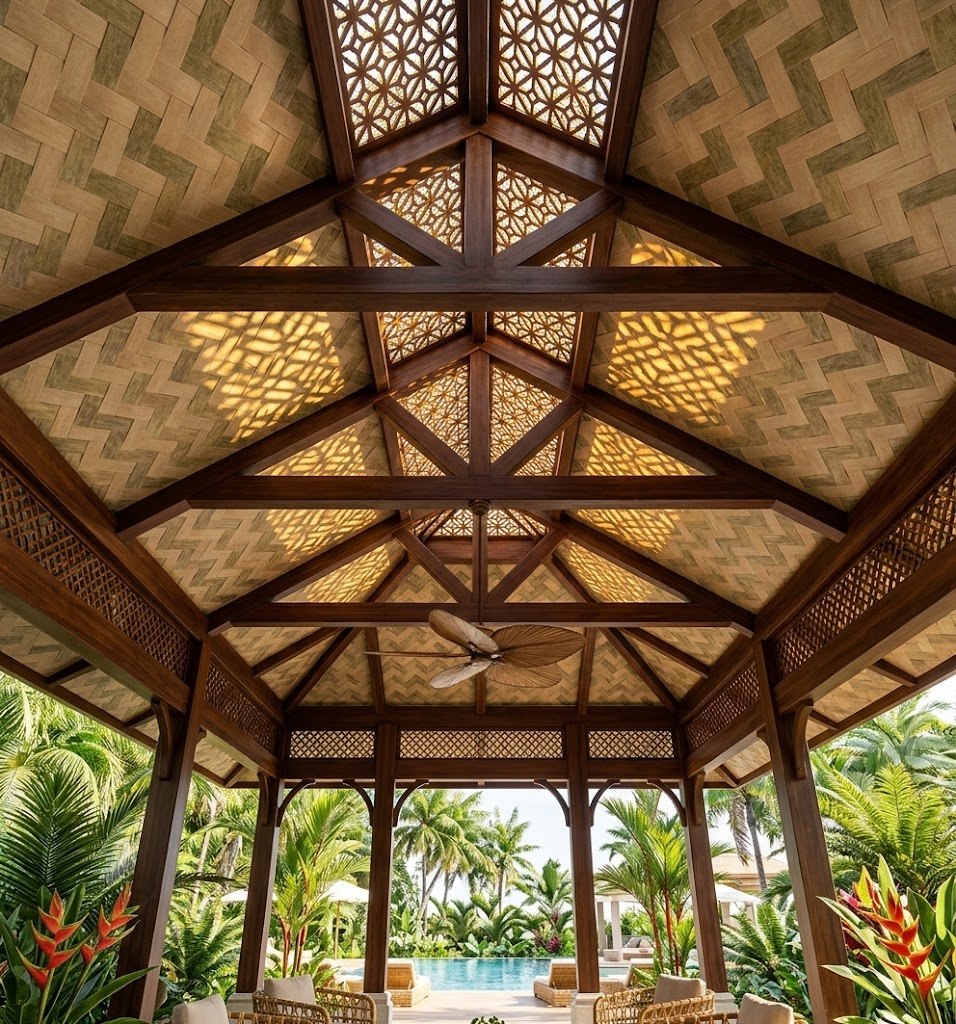
You might frequently see the term “mat roof” when researching bamboo styling. Specifically, “mat roof meaning” refers to roofing made from layered woven mats used as shade or a decorative ceiling layer in traditional structures.
Today, you can use HDPE synthetic products to achieve this exact bamboo roof aesthetic. Because artificial mats offer better uniformity and resist splitting, they are an excellent choice for tropical cabanas and patio ceilings. However, remember that they are decorative layers; always follow local building codes for actual structural roofing.
Are HDPE Engineered Materials Eco-Friendly?
Many shoppers mistakenly assume synthetic materials are less green by default. However, true sustainability depends on the full product lifecycle. Therefore, a long-lasting engineered mat made from HDPE avoids frequent replacement and significantly reduces total landfill waste over time.
When evaluating eco-friendly options, look for products featuring highly recyclable materials. For example, you can read the U.S. EPA’s overview of waste management to understand how longevity reduces environmental impact. Additionally, if you are focused on green building, the U.S. Green Building Council’s LEED program provides excellent guidelines on sustainable material sourcing.
Conclusion
Choosing an HDPE engineered product is a straightforward way to get the tropical-inspired look you desire. By prioritizing durability, hygiene, and consistent performance, you completely eliminate the headaches of rotting and splintering. In short, experiencing these synthetic bamboo mat benefits firsthand is a smart, modern upgrade for both your interior floors and covered outdoor spaces.
Categories
Related content
Bamboo Wall Paneling: 5 Creative Ways to Use It in Your Home
What are the scenarios where synthetic bamboo can be applied?
Synthetic bamboo mat benefits: top reasons to choose one
Advantages of Synthetic Bamboo Fencing: Durable & Eco-Friendly Solutions
Synthetic Bamboo vs Natural Bamboo: Best for Fences & Panels