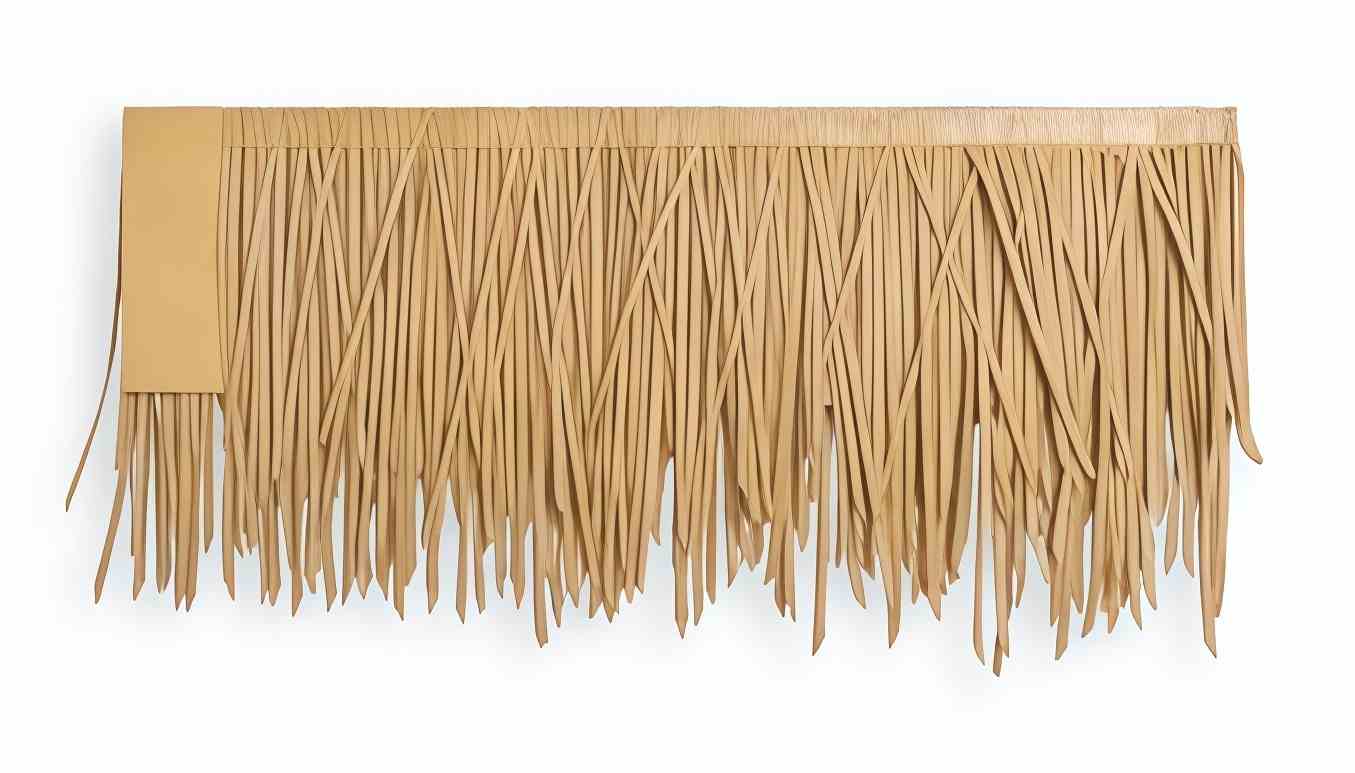
Synthetic Thin Straw Thatch Doubleside-Waterproof (Size: ∞×550mm)
Love the charming look of a thatched roof but hate the idea of replacing it every few years? You’re not alone. Natural straw is beautiful, but in practice, it’s a constant battle against decay. In many climates, a natural roof might only last two to five years before needing costly repairs or a full replacement.
This is where synthetic thatch changes the game. So, is artificial thatch waterproof? Absolutely. Unlike natural straw that acts like a sponge, synthetic panels are non-porous and designed to shed rain like a raincoat. This simple difference in waterproofing prevents the rot and mold that plagues traditional thatch, directly answering the question of how long faux thatch lasts: over 20 years.
When you see the synthetic thatch vs natural thatch showdown, the smart choice becomes clear:
- Lifespan: 20+ years (warrantied) vs. 2-5 years
- Water Resistance: Waterproof (sheds rain) vs. Water-absorbent (promotes rot)
- Maintenance: Occasional rinse vs. Costly professional upkeep
The Hidden Dangers It Solves: Fire, Pests, and Weather
The charming look of natural thatch often comes with a serious worry: fire. Fortunately, modern synthetic thatch is designed with safety as a top priority. Many products are a fire resistant thatch alternative that earns a Class A Fire Rating—the highest standard available for roofing. This means the material is extremely difficult to ignite and won’t spread flames, giving you the same peace of mind as a traditional shingle roof.
Beyond fire, natural straw faces a constant battle with moisture and pests. Because synthetic thatch is made from a solid, non-organic polymer, it offers no food or nesting material for insects, birds, or rodents. This also makes it one of the most effective weatherproof thatch roofing options, as the material simply can’t rot or grow mold, ensuring your structure stays clean and secure through any season.
But what about the sun’s relentless rays? To prevent color from fading, quality UV resistant thatch panels are made with built-in UV inhibitors. Think of it like a powerful, permanent sunscreen for your roof, protecting its rich, natural color for decades. While the material is safe and durable, does it actually look real?
But Does It Actually Look Real? Unpacking the Authenticity
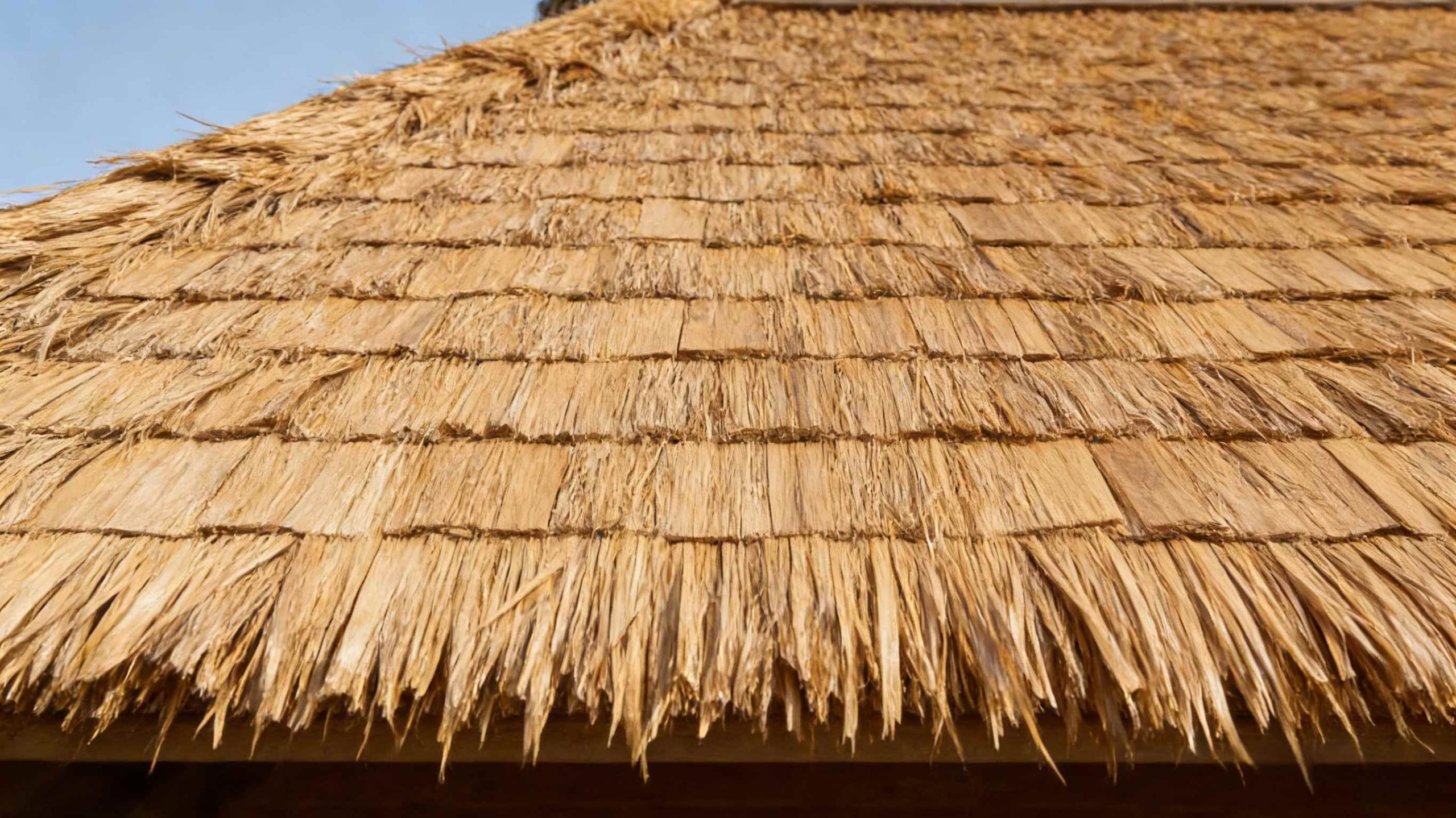
It’s a fair question. The secret to a convincing faux thatch roof isn’t just mimicking the general shape of straw, but capturing its natural, perfect imperfections. The goal is a tropical paradise, not a plastic-looking imitation, and the best products achieve this with remarkable precision.
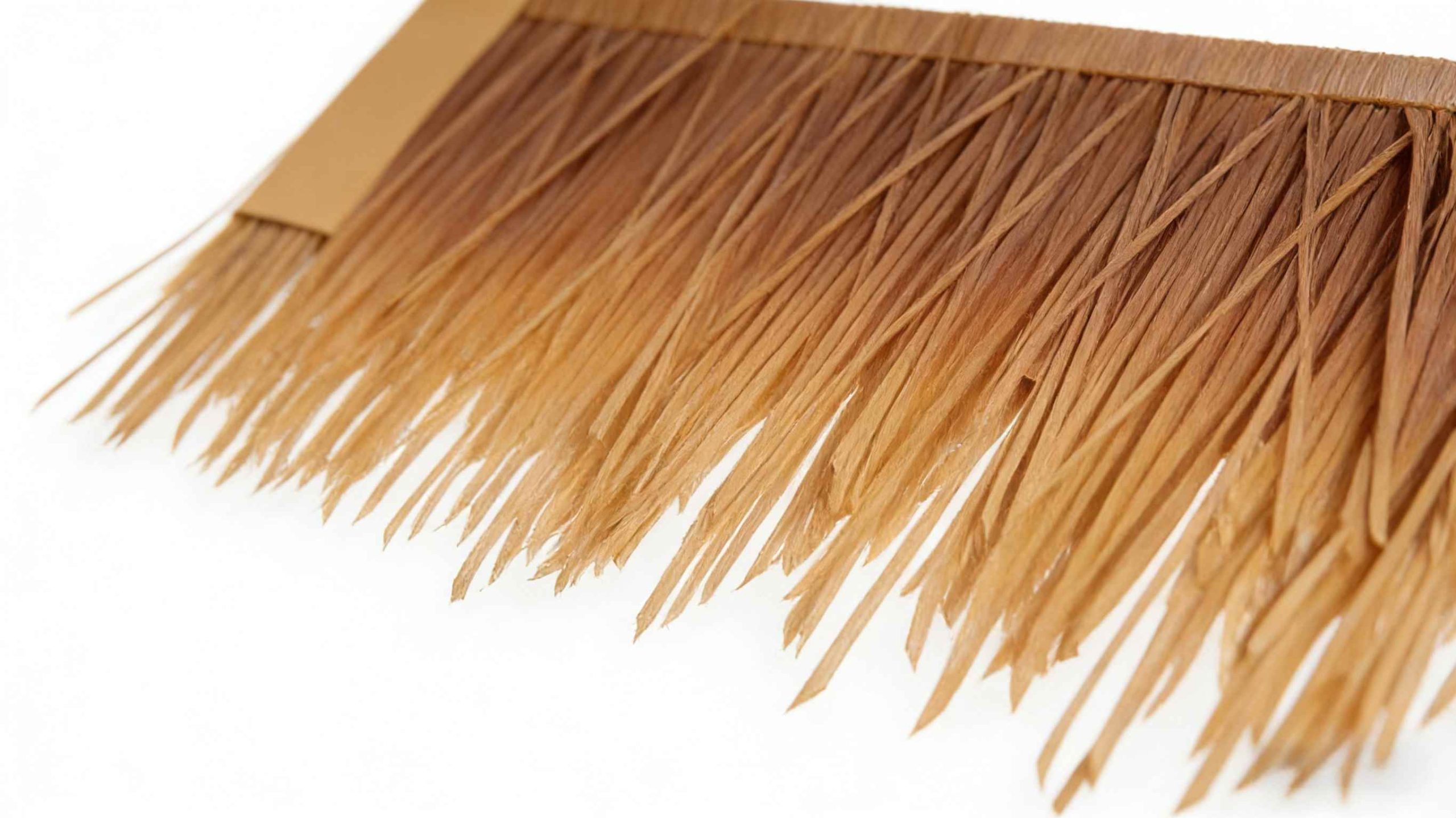
This is where the manufacturing process gets fascinating. To create the best artificial thatch, producers start with molds taken directly from real, hand-selected bundles of straw. Every unique groove, ridge, and subtle texture is captured perfectly. This means the surface of each panel isn’t an artist’s interpretation—it’s a direct, three-dimensional copy of nature itself.
Color is just as critical for realism. Instead of a single, flat shade of tan, high-quality panels incorporate a rich blend of tones in every shingle, from sun-bleached highlights to deeper, earthy browns. This subtle, built-in variation is what truly tricks the eye and gives the roof a dynamic, genuinely organic appearance.
Ultimately, while natural thatch starts to rot and discolor within a few years, a synthetic roof holds its authentic, “new” look for decades. Often made from durable, recycled material thatch roof options provide lasting beauty and peace of mind. This long-term performance is a huge factor when you start to break down the real cost.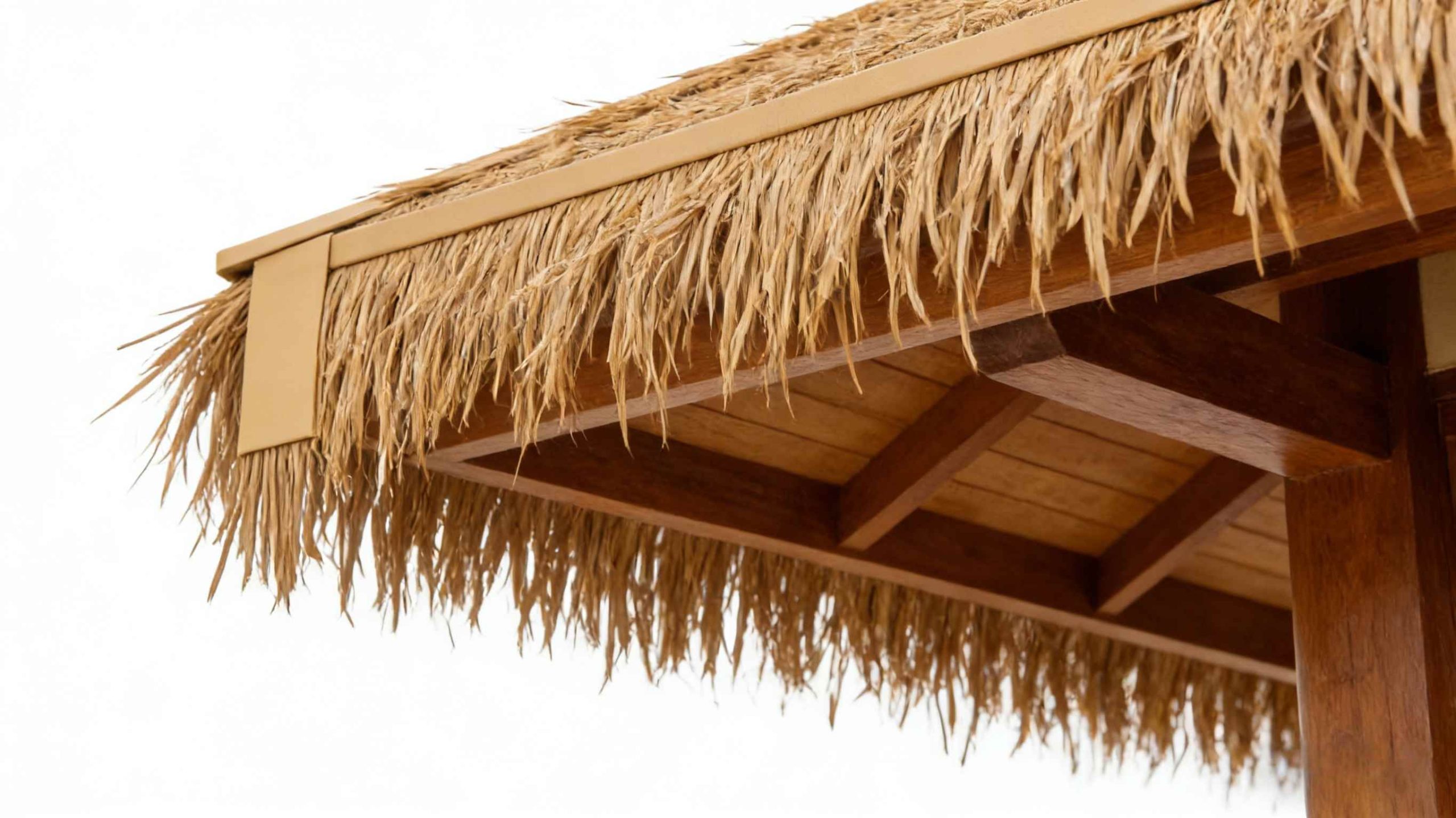
Breaking Down the Real Cost of an Artificial Thatch Roof
When considering the artificial thatch roofing cost, it’s easy to focus on the initial price tag. While synthetic materials often have a higher upfront cost than natural straw, that number is only a small part of the financial picture. The true value becomes clear when you look at the total cost over the decades you’ll own it. It’s the difference between a short-term expense and a long-term investment.
Think about it this way: natural thatch is like a subscription you have to renew every 3 to 5 years, paying for new materials and professional labor each time. A synthetic, low maintenance tiki hut roof, however, is a one-time purchase. It’s installed once and designed to last for 20+ years, completely eliminating those recurring bills and maintenance headaches.
Ultimately, choosing one of the best artificial thatch brands turns a repeating expense into a smart, single investment, saving you thousands over the roof’s lifetime. This long-term value is even greater when you factor in the next big question: can you really install this yourself?
Can You Really Install This Yourself? A Look at DIY Installation
The idea of installing your own roof might sound intimidating, but that’s where modern synthetic thatch really shines. Unlike complicated roofing jobs, many products are designed with the weekend warrior in mind. The secret is in the synthetic thatch panels—large, pre-assembled sections that make the whole process feel more like tiling a floor than building a complex roof. This design is the key to understanding how to install synthetic thatch panels quickly and efficiently.
So, what does the process look like? Following a basic DIY palapa roof guide, you’ll typically start at the bottom edge of the roof and work your way up, overlapping the panels to create a seamless, layered look. They attach easily to a solid plywood deck or even an open-frame structure. You won’t need specialized equipment; most projects only require:
- Measuring tape
- A screw gun or pneumatic stapler
- A utility knife for any custom cuts
Because these large panels cover so much area so quickly, you can realistically transform a standard gazebo or tiki bar in just one weekend. This straightforward installation process is often the final, rewarding step in creating your own backyard paradise, built to last.
Your Backyard Paradise, Built to Last
A classic thatched-roof beauty is no longer just a tropical dream—it’s a genuine possibility for your own backyard, free from the worries of rot, pests, or constant repairs that come with natural straw.
Plastic thatch roofing delivers all the paradise with none of the problems. It stands out as the ideal weatherproof choice for a low-maintenance tiki hut roof, giving you decades of enjoyment instead of years of work.
Your first step toward that backyard escape is simple: grab a tape measure, walk out to your gazebo or patio area, and imagine the possibilities. You can turn that vision into a safe, durable, and beautiful reality.
More help
Links & resources (authoritative references): For code compliance and safe installation of roofing materials, consult the International Building Code (IBC) – roof covering requirements and the NFPA fire safety standards (codes & standards). For jobsite safety during roof work, follow OSHA fall protection guidance for roof work. For performance testing references (including weathering and material methods), review ASTM standards for roofing materials and weathering tests, and for broader fire research background see NIST fire research resources. For sustainability and end-of-life handling, refer to EPA recycling guidance and material disposal resources.