Synthetic Round Straw Thatch: The Permanent Tiki Hut Solution
Dreaming of that perfect tiki hut but dreading the reality of rot, bugs, and constant repairs? Natural straw looks incredible, but it’s a constant battle against decay and pests. For centuries, property owners accepted this trade-off: beauty came with a short lifespan and a lot of work.
Modern synthetic thatch provides a permanent solution. If you’re comparing synthetic vs natural thatch, consider that modern synthetic roofing materials such as hdpe and pa composites are engineered for resilience. Rather than fragile vegetation, the best artificial thatch is an engineered polymer, sometimes made from recycled materials. It’s designed from the ground up to perfectly capture the rustic look of real straw, eliminating the worry of a cheap, plastic imitation and providing a durable, long-lasting synthetic thatch roof.
Like composite decking, it’s immune to the rot, mold, and insects that plague a traditional thatched roof and natural thatch, making it a lasting investment.
Will It Look Fake? The Truth About Modern Synthetic Straw
It’s the first question on everyone’s mind: will it look fake? Forget the shiny, stiff plastic you might be picturing for your palapa. Today’s synthetic thatch, used in synthetic thatch roofing, is meticulously crafted, often using molds from real straw. As you can see in the photo, each strand has subtle color variations and a realistic texture, creating a look that’s nearly indistinguishable from a hand-laid thatched roof, even up close. This isn’t a cheap imitation; it’s a carefully engineered replica.
One of the most popular styles is synthetic round straw thatch . This option beautifully mimics the classic, tube-like shape of dried reeds, making it one of the best Bali hut roofing material alternatives. It delivers that iconic, layered, and lush tropical appearance without the constant maintenance headaches that come with natural materials.
To complete the authentic look, you can choose colors that capture a specific moment in time. Whether you want the fresh, golden-brown of new straw or the distinguished, silvery-gray of a roof that has gracefully weathered, the choice is yours. This ensures your synthetic round straw thatch roof perfectly matches the exact aesthetic you’re dreaming of, right from day one.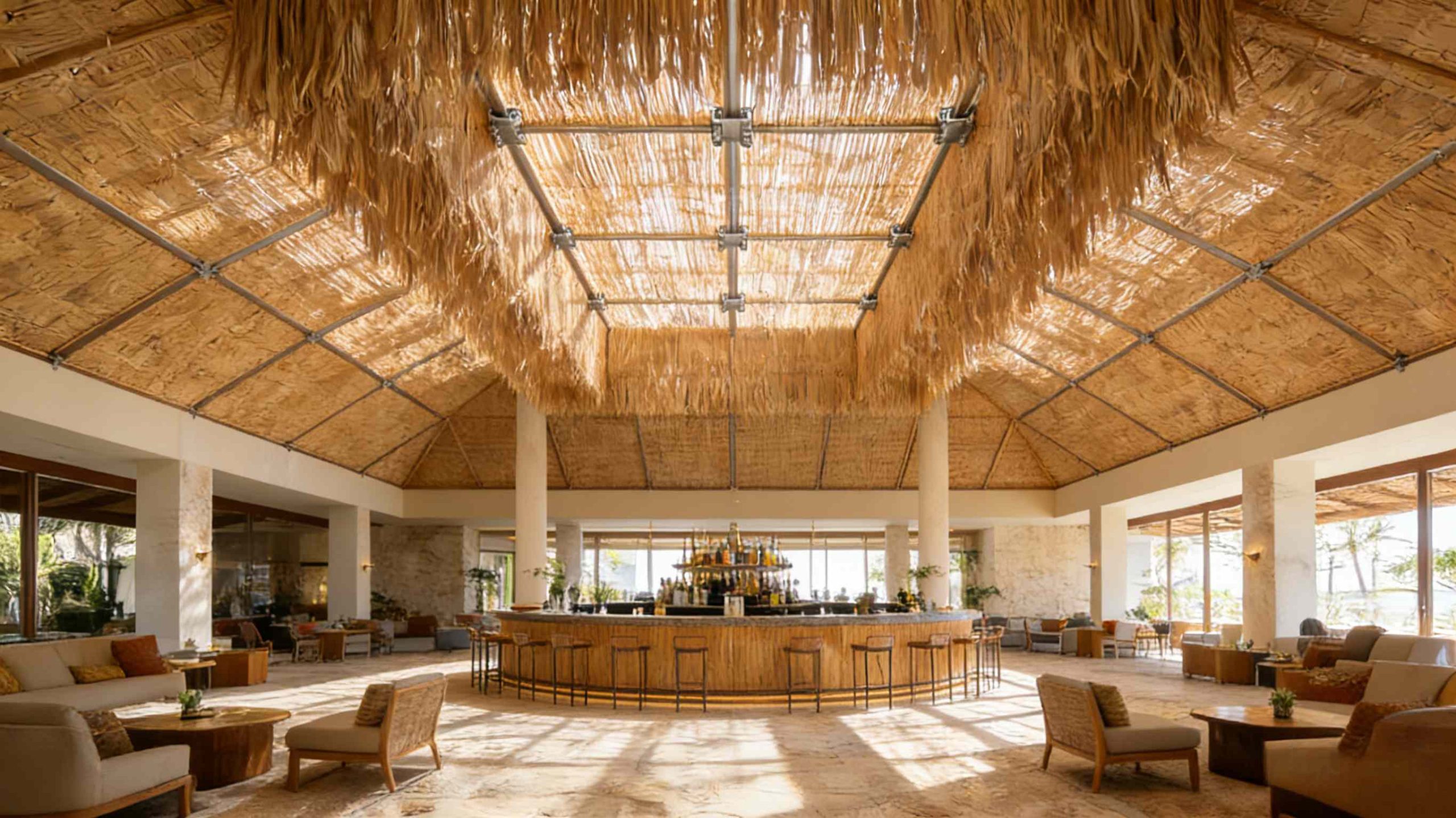
The Big Payoff: How Long Does Artificial Thatch Last?
Homeowners often ask, how long does a thatched roof last compared to modern alternatives? While looking authentic is crucial, the real game-changer is how long the material lasts. Natural straw forces you into a frustrating and expensive cycle of replacement every 2 to 5 years as it rots, decays, and breaks down. Synthetic thatch is engineered to break that cycle entirely, saving you time, money, and labor for decades.
The difference in durability is staggering and reveals its true value. In fact, most high-quality products are so tough they come with a 20-year warranty.
Natural Thatch: Replace every 2-5 years.
Synthetic Thatch: Lasts 20+ years.
This means UV resistant thatch maintenance is minimal. Because the material is non-porous and engineered to handle the sun, it won’t rot or become brittle. An occasional rinse with a hose is all it takes to keep your weatherproof outdoor tiki bar roof looking perfect, year after year.
Engineered for Peace of Mind: Fire and Wind Safety
Beyond its incredible lifespan, synthetic thatch offers safety that natural materials simply can’t match. Many are available as fire resistant thatch options with a Class A Fire Rating—the highest level of fire resistance a building material can achieve. This means that unlike dry, flammable straw, the material is engineered to resist catching a flame and will often self-extinguish, giving you invaluable peace of mind.
This focus on engineering extends to weather. A weatherproof outdoor tiki bar roof made from synthetic thatch is specifically designed to handle high winds. The individual panels or shingles are fastened in a way that prevents them from being ripped away during a storm, helping your thatch roof stay secure. These synthetic thatch roofing systems use the same commercial grade synthetic thatch technology trusted by coastal resorts to withstand harsh conditions.
Finally, a sturdy roof also means no unwanted guests. Because the durable polymer offers no food or shelter, you’ll never have to worry about insects, birds, or rodents making a home above your head.
The “Non-Waterproof” Detail: How Does Thatch Actually Keep Rain Out?
Surprisingly, a thatched roof—whether natural or synthetic—isn’t waterproof like a sheet of metal. Instead, it’s designed to expertly shed water. The dense, overlapping layers are angled to create a path for rainwater, channeling it down and off the edges of the roof. This ancient and effective method relies on gravity and flow to keep the area below dry during a typical downpour.
So, is synthetic thatch waterproof enough on its own? For open-air structures like a simple shade palapa, it’s often sufficient. But for any space you need to keep 100% dry, like a cabana or outdoor bar, the thatch is installed over a solid, waterproof sub-roof. This simple underlayment, often made of plywood covered with a waterproof membrane, provides the sealed barrier while the synthetic thatch provides the beautiful look and primary protection.
This two-layer system makes a DIY tiki hut roof installation more straightforward and reliable. You first create the simple waterproof base, then focus on how to attach artificial thatch panels to the surface for that iconic look.
Is Synthetic Thatch Worth the Cost?
While the initial cost of fake thatch roofing is higher than natural straw, it’s best viewed as a long-term investment. Its value is realized over many years, not on the day of installation.
With natural thatch, you’re signing up for a complete—and costly—replacement every 3 to 5 years. That cycle of labor and material costs quickly adds up. In contrast, a single installation of commercial grade synthetic thatch is designed to last for 20 years or more, eliminating those recurring expenses entirely and saving you thousands over the life of the roof.
Ultimately, the value extends beyond money saved. It’s the peace of mind from knowing you have decades of consistent beauty without the constant worry and work—a crucial benefit when weighing the synthetic palm thatch pros and cons.
Your Perfect Backyard Oasis, Built to Last
That dream of a perfect tiki hut roof no longer comes with a list of worries. An authentic look is possible without the constant repairs or safety risks. With the proven longevity of synthetic round straw thatch, you can have a beautiful escape without the traditional burden.
Your next step isn’t just finding a product—it’s envisioning your project. Picture that ideal palapa roofing material bringing your space to life. Start exploring styles, confident that your beautiful choice is also the smart, durable one.
More assistance
For background on traditional thatched roofs, see [this overview of traditional thatching techniques] https://en.wikipedia.org/wiki/Thatching
For general roofing code guidance, refer to the [International Building Code (ICC) https://codes.iccsafe.org/